Showing posts with label segmentation. Show all posts

Tuesday, April 7, 2020

Marketing Focus During (and After) Coronavirus


“We’re All in This Together”. This seems to be a common marketing theme lately. And while many companies are using their marketing channels to provide genuine help, coupled with certainty that their products/services will continue to be supported, a few simply use this statement as a book cover, loosely wrapped around their existing or worse, exploitative offers. Yea, that’s not really agile marketing.

If you think about it, right now, given everything going on, our ultimate B2B/B2B2C target audience is the CEO. Why? Because they are knee deep in crisis mode at the moment and are formulating/executing plans that serve to prevent their company from getting badly injured or worse, going out of business altogether. Whatever solutions they are mandating are permeating the organization, resulting in all hands on deck scrambling to execute. Clearly, CEOs have or are preparing for a recession.

 Analyzing Past Recessions to Improve Targeting in This One

In an insightful Harvard Business Review article first published in 2010 titled, “Roaring Out of a Recession”, the authors studied the approaches that 4,700 public companies took to combat the last 3 recessions, in an effort to identify the most effective strategies. They analyzed company data during the 3 years before and after each recession to come up with a quantitative winning formula.

 The Study Identified Several Thematic Approaches

  1. Purely Defensive: Reduce expenses across the board. Lower head count, reduce marketing and operating costs, eliminate T&E, postpone investment in assets and new business development.
  2. Purely Offensive: Use the slowdown as an opportunity to invest in longer-term payoffs like acquiring opportunistic talent, other businesses or biz-dev assets, while increasing marketing budgets to gain market share, under the assumption that in part, competitors may have opted for approach #1.
  3. A Pragmatic Combination of the Two: According to the research, “Companies that mastered the delicate balance between cutting costs to survive today and investing to grow tomorrow did well after a recession.”
But There was also a 4th Approach

A progressive subset of the 3rd that did better than anyone else. According to the article, “This group deploys a specific combination of defensive and offensive moves. They cut costs mainly by improving operational efficiency rather than by slashing the number of employees relative to peers. However, their offensive moves are comprehensive. They develop new business opportunities by making significantly greater investments than their rivals do in R&D and marketing, and they invest in assets such as plants and machinery. Their post-recession growth in sales and earnings is the best among the groups in our study.” The article goes on to include specific case studies of companies who adopted each of the 4 approaches and the results.

In short, those companies that focused on operational efficiency, together with market development and asset investment did the best, 3 years after a recession. Those that focused on employee reduction, together with market development & asset investment did the worst. (see chart below)


No alt text provided for this image
Source: https://hbr.org/2010/03/roaring-out-of-recession

This analysis could be used as a strategic marketing framework for things like ABM, segmentation strategies and predictive targeting. If we focus our value prop and market content towards supporting the initiatives CEO’s are mandating within the “BEST” category, it stands to reason that we could accomplish several things:
  • Potentially reduce what will likely be longer sales cycles by adjusting our value prop and content to align more closely with the ’BEST’ approach, ensuring quicker buy-in and investment support at C-Level.
  • Help enable the inherent success of the very companies that stand the best chance of surviving the current virus economy. Having successfully enabled and supported these companies through a recession together builds a deep trusting relationship that endures, thereby improving CLV.
  • Make heroes out of not only our own sales teams, but those customers on the front lines searching every nook and cranny for operational cost cutting efficiencies, automated solutions, digital systems, platforms and services that allow them to do more with less.
  • If we can predict what changes within our customers’ ecosystems might become permanent post Covid-19 and then work with product/service teams to align development focus around the new normal, we’ll be well prepared to exploit these new opportunities as they become permanently entrenched and standardized.
  • By targeting our marketing towards the companies that are undertaking progressive 4th group solutions, our (potentially smaller) marketing budgets go further and our chances of sustaining and even increasing ROMI improves.
  • Having this framework to lean on as marketing teams work quickly to adjust their focus could help prevent trying to boil the ocean.
“The intersection of opportunity and preparation is something we call luck.” This popular quote seems especially appropriate since we could all use as much luck as we can get right now. At a strategic level, focusing marketing spend on the companies who's survival tactics historically supported their emergence as winners post recession may just be the luck we need.

Steven Kellogg

P.S. On a personal note, I've been keeping my agile marketing skills up to date by recently completing 4 marketing certifications that I'd been working on remotely at Cornell University:
  • 360 Degree Integrated Marketing Certification
  • Marketing Analytics Certification
  • Digital Marketing Certification
  • Strategic Marketing Certification
Covid 19 has forced us all to be much more agile, both personally and professionally. Agile, in part means, "Having a quick, resourceful and adaptable character". Being agile is no longer an option, it is a requirement. And when all this is over, it may just be among the key underlying skill sets we mastered during this extraordinary time in history.

Stay safe.


Tuesday, February 26, 2013

Reminder Emails About Reminders


Tracking a lead’s activity is easy using Marketing Automation. And while tracking inactivity is just as easy, it can be even easier to annoy those that don’t respond by reminding them to respond. And then reminding them to respond to your reminder. And finally reminding them there is still time to respond to your last 3 reminders. Yikes, you see where this is going.

Example:
  • You send out an email with a special offer.
  • After 3 days you send the same email with a different Subject Line to those who didn’t respond.
  • 5 days later you send a “Still Time” to those who still haven’t responded.
  • 7 days later you send a “Last Chance” email to those who haven’t yet responded.

At best, you are training your by now catatonic leads to actually ignore the first few emails, knowing they will be receiving reminders as a deadline approaches. Once they are trained to ignore certain emails however, it won’t be long before the rest of your emails start to get ignored.

At worst, you are probably annoying leads that aren’t responding for a reason. Maybe it’s the wrong product or wrong person or wrong time.

Now if you work for a large enterprise, with multiple BUs, imagine what would happen if your leads get bombarded with multiple reminder emails from multiple campaign from multiple business units. How would you feel if you received 6 reminder emails, all related to different offers, from the same company, on the same day! It happened to me. I unsubscribed.

 Recommendations:
  • If you only send one email campaign every quarter, then reminder emails are completely appropriate. But if you’re like many clients and send campaigns weekly or even monthly, use Reminder Emails strategically.
  • Don’t include them as routine steps in your campaign template, otherwise you will definitely train your leads to ignore the originals over time. Use reminder emails where they really matter. The big stuff.
  • Make sure someone controls the overall volume and timing of emails from all sources within your company. Gating the flow of emails can get complicated with hierarchy rules, but at its simplest, It’s easy to create a little program that checks to see whether someone has received any marketing email within the last X days and if so, the campaign only sends the current email when the answer is no. This mandates a small break between the consistent onslaught (er, I mean flow) of emails.
  • Finally, get proactive about motivating people to update their preferences. This should cut down on having to rely on reminders in the first place. It’s a hard sell to get someone to actually go to the trouble of updating their preferences, but if you make it worth their while, everyone wins. Knowing which content a lead has chosen as relevant is worth double its weight in gold, so make sure the reward for divulging this vital info is of equal value. A new car perhaps? jk.

BTW: Sending an email reminding people to respond to reminder emails requesting they update their preferences usually doesn’t work :)


Steve Kellogg
Eloqua Certified Marketing Automation Best Practices Consultant, Astadia


Let’s connect on Linkedin
Let’s Connect on The Front Porch
Let’s connect on Facebook
Let’s connect on Google+


Tuesday, October 18, 2011

Creating Content for the Buying Committee


Creating Content for the Buying Committee

Most B2B sales are not decided upon by just one person. Often a committee of folks is involved, both during the initial decision process and further down the buyer journey, during the purchase process. As many as 8 or more participants weigh in internally before a final “Let’s do it” is heard.

As frustrating as this is for sales, it’s even more frustrating for marketers trying to:

  1. Identify these committee members and 
  2. Serve them relevant content

Unfortunately we usually only get access to just one committee member, the person who is raising their hand. He or she has clicked thru one of our emails, filled out a form, attended a webinar, etc. and made themselves known.   

Let’s call this person the Champion.


Sirius Decisions has identified a total of 4 committee member types:

  • The Champion
  • The Influencer
  • The Negotiator
  • The Ratifer


So how do you send relevant content to these people, at the correct time they need to see it, without even knowing who they are?

You can’t. Not unless they raise their hand too. Sorry.

So, we are left with 2 approaches to ensuring relevant content is sent to the right person at the right time:

  1. Enable the Champion as our “Content Distributor”
  2. Populate Social Media, as well as your own website, with easy to find answers to likely questions from the Influencer, the Negotiator and the Ratifier.

Creating the Personas
The first step is to create personas for each of the 4 committee member types. Ask sales what keeps each one up at night? What do they want answers to? What content tools can you provide that will help answer the question, “What’s in it for them?” Once we know what list of concerns each committee member type has, we can create specific content to address each one of their concerns.

Converting the Champion to “Content Distributor”
Once the Champion has initially raised their hand, the next step is to add them to a nurturing/scoring program that feeds content, directed at them initially. This is typically Thought Leadership content. It’s never about you at this stage, it’s always about what you can do for the Champion. The goal is to provide enough credibility that your company makes it to the short list of evaluated vendors.

Focus on content that is appropriate not only for the Champion, but for the Influencer as well. The goal is to get the Champion to pass your Thought Leadership along to the Influencer. 

Don’t forget, the Influencer is searching on their own, so make this content easy to find on your website as well, along with targeted Social Media, just in case you haven’t converted your Champion to “Content Distributor” just yet.

Content that makes the Champion look like a hero will get forwarded more often than “non-hero” content. So what the heck is Hero Content? “Hero Content” has to be good enough to warrant a “Hey Influencer,  look what I found” reaction from the Champion.

Assuming the Champion progresses through the buyer journey and is engaged with your nurturing content, at some point the lead’s internal Decision Process shifts to a Purchase Process. The trouble is you may not know when this actually occurs. The Champion may have scored very high at this point, but the Purchase Process committee members may not have even weighed in yet.

Based on what you and your sales team know about your own sales cycle, you can send a Purchase Process trial balloon email to the Champion when the time feels about right and see what the response is. Did the Champion click thru to the ROI calculator? Did it appear as if they may have forwarded the email?

If so, now is the time to leverage your Champion to distribute content relevant to the Purchase Decision group. ROI calculators, ROI Case Studies, Financial risk aversion content. It’s all about the money. 

Once again, this group is searching on their own as well. Make sure this type of content is easy to find, not only on your website but on targeted Social Media as well. Hero content works best here too.

Summary
Just because we don’t always know who the committee members are, we can use this strategy to convert the Champion to our “Distributor of Content” to those behind the curtain. Content creation should therefore be focused on serving the following committee member types:

The Decision Process
·       The Champion
·       The Influencer

The Purchase Process
·       The Negotiator
·       The Ratifier

This will help define the What. Leverage MA to define the When.

Visit mybrand new website and learn more about marketing segmentation best practices.


Steve Kellogg
-Demand Generation/Marketing Automation Consultant, Astadia
-Eloqua Certified Marketing Automation Best Practices Consultant

Please share this:
Share 

Tuesday, March 8, 2011

Building a Nurturing Fast Lane


Nurturing programs do a great job of building relationships, from tire kicker all the way to ready to buy leads.

There are those rare leads however that are impatient and are ready to buy sooner, sometimes much sooner. Your nurturing pace is too slow for them and they are ready for contact NOW.

While lead scoring programs monitor and report on these, anyone who indicates that they want contact immediately, should get contact immediately – like in the next 5 minutes. Lead scoring programs are fast, but not that fast!

The Nurturing Fast Lane

it’s surprising how many leads actually take action if you give them the opportunity to request contact immediately, where it makes sense. We all know that just slapping a Contact Me link on your website usually produces nada, but presenting a way for impatient leads to make contact at the end of an engaging asset often yields better results.

Try adding a Contact Me Now link at the end of every asset in your nurturing program. For example, a link at the end of an entertaining video, an informative whitepaper or a relevant case study. Add this fast lane option to the end of each asset you deliver, even if it’s just an email.

It often relieves friction if you give them a choice of how they want to be contacted. Something like this:

Yes I want to learn more:
BTW: This usually also gets you a valid phone number if they choose that option. Expect roughly 75% of responses to want email contact vs. phone contact, but hey, its better than wanting no contact!

Rely on form notifications to get this into the hands of sales immediately. Time is of the essensce. An immediate repsonse is always ideal. Sales love talking with leads who are engaged right now.

If you don’t have a fast lane built into every nurturing touch point, try adding it. I’ve seen results anywhere from 0.5% to 3% response rates! The more interesting, informative, relevant and sometimes entertaining the content, the better the conversion. The story of our lives.

Visit my brand new website and learn more about lead nurturing.

Steve Kellogg
-Demand Generation/Marketing Automation Consultant, Astadia
-Eloqua Certified Marketing Best Practices Consultant

Please share this:


Share 

Friday, December 17, 2010

6 Marketing Automation New Year's Resolutions - #6

Marketing Automation New Year's Resolution #6:
HARVEST THE UNKNOWN VISITOR

Congratulations! If you’ve implemented the first 5 Marketing Automation New Year’s Resolutions, you moved from Demand Generation to Demand Management – a major and significant evolution!

You now control every square inch of the funnel and are able to fully report on each funnel stage’s contribution to revenue. All leaks are plugged, all metrics fully in place, data standards in place and your funnel is now fully aligned with both sales and marketing.

So what’s next, a vacation? You certainly deserve one! And when you return, get ready for the final frontier -- the universe before the funnel.

There are 4 steps to this:


Step 1: Inventory All Pre-Funnel Feeders

Leads live a double life. The life you know about as they become known to you (through tracked implicit and explicit indicators) and the life you don’t know about. The specific journey that got them introduced to your neighborhood. LinkedIn, Facebook, Digg, StumbleUpon, Google Buzz, Twitter, PPC, Wikipedia, organic web searches, blogs and a number of other sources we may not even know of, all play a role in crafting an invitation to your party.

It is this journey, this universe of unknown activities that we need to understand and then harvest in order to provide a perpetual feeder into our now healthy, happy funnel.

Step 2: Establish Dashboards That Determine Influenced Revenue of Each
Build Dashboards that focus on mapping the pre-funnel journey. Find and track every single freeway, side street and back road that leads to your website and begin to make a connection to these initial pre-funnel activities and resulting influenced ROI.

Step 3: Prioritize Initiatives That Consistently Influence the Most Revenue
As you gain insight into the pre-funnel sources that ultimately contribute the most to influenced revenue, you can begin to rank and prioritize the major pre-funnel influences. This ultimately gives you the metrics you need to support increased efforts and resources on those influences.

Step 4: Focus Resources on Expanding Those Initiatives

From here it’s just a matter of focusing resources on what is working while abandoning the support of pre-funnel efforts that don’t pay off in influenced revenue.

There you have it, a complete 2011 Marketing Automation Roadmap.

Can you implement all 6 Resolutions in 2011? It’s possible. But don’t get frustrated if it takes longer than you’d like. As you’ve heard many times by now, marketing automation is a journey, not an event.

But if your organization is ready to start tackling each Resolution one at a time and in the order prescribed, you are on your way to being added to that very elite group of "Best in Class" performers.

Updated: 5-8-12
Visit my brand new website and learn more about Social Media Marketing

See all 6 Marketing Automation New Year's Resolutions:

Resolution #1 - Establish Corporate Alignment
Resolution #2 - Establish One View of the Truth
Resolution #3 - Establish Data Standardization
Resolution #4 - Fill in the Content Gaps
Resolution #5 - Tighten the Plumbing
Resolution #6 - Harvest the Unknown Visitor


Steve Kellogg
-Demand Generation/Marketing Automation Consultant, Astadia
-Eloqua Certified Marketing Best Practices Consultant

Please share this:


Share

Friday, September 3, 2010

Left Brain is the New Right Brain


Are you more Left Brain dominant (logical, analytical, plays it safe) or more Right Brain dominant (passionate, creative, risk taker) in your work?

In general, if you are in IT, chances are you are more Left Brain dominant. If you are in sales or marketing, you are probably more Right Brain dominant.

But when it comes to adopting marketing automation, the left brain is the new right brain, at least for marketers. Being creative, artful and engaging isn’t enough to get your message through all the clutter any more.

Like it or not, we (us marketers) have to start getting (gulp) data-centric. The sad truth is that if your company has been in existence for more than a couple of years, chances are, the quality of your data is awful. I can almost guarantee you that this will severely impact your long-term marketing success.

Even the most expensive marketing automation tools in the world won’t get you results if your message isn’t relevant. You can’t have relevance without good data. You can’t have good data without data standards. You can't have data standards without a process and you can’t have a process without the left brain.

To illustrate, I've created a little graphic that shows how the two brains need to work together in delivering the right message to the right person at the right time. (Notice the double entendre – right person, right brain -- clever eh?)


Marketing automation is definitely a group effort, with both dominant left brainers and right brainers crossing paths and working hand in hand to deliver results.

So fear not right brainers, it’s time to get out of your comfort zone, get technical and embrace data. BTW: There are some great new data tools out there, including Jigsaw and others. Eloqua has a good Data Normalization program that can help as well.

BTW: If you are curious as to whether you are left or right brain dominant, take this interesting little test.

P.S. If the test shows you with equal dominance on both sides, you’re one of us :)

Updated 5-8-12
Visit my brand new website and learn more about marketing automation

Steve Kellogg
-Demand Generation/Marketing Automation Consultant, Astadia
-Eloqua Certified Marketing Best Practices Consultant

Please share this:


Share

Tuesday, April 6, 2010

Segmenting the Zoo

Photo by E.G. Bucknell

Let’s say you sell wild animal food and you have a new line of vitamin-enriched foods to announce. Your target market includes all the animals in zoos.

Obviously you wouldn’t send the same announcement out to the whole database. Lions will be interested in learning about the benefits that pertain to them, while flamingos will be interested in relevant benefits to them.

So while you could send a completely different message to each of the 1,857 different animals, is this practical? How do you decide which segments are worth creating and targeting?

 Segmentation Best Practices:

Does your segment meet all of the following criteria?
  • Is this segment possible to produce? Do I have (or can I get) the implicit/explicit data to even capture them?
  • Is this segment accessible? Do I have their contact information?
  • Is this segment worthy of a different message than others?
  • Is this segment fairly stable? Do the members move in and out of this segment quickly or do they remain fairly dormant?
  • Is the segment substantial enough to be profitable?
If the answer is NO for any of the above, targeting your message to this group is probably not worth it.

Updated 5-8-12
Visit my brand new website and learn more about marketing segmentation best practices

Steve Kellogg

-Demand Generation/Marketing Automation Consultant, Astadia
-Eloqua Certified Marketing Best Practices Consultant
-Join me on:  Linkedin | Twitter | Facebook

Tuesday, February 23, 2010

Measuring Lead Attention Span

Here is an easy way to measure the general attention span of your active lead database. It borrows the same formula used to track Churn Rate.

definition -

Churn rate is a measure of customer attrition, and is defined as the number of customers who discontinue a service during a specified time period divided by the average total number of customers over that same time period.

So the formula looks like this:


While churn rates are closely watched by companies that depend on subscribers, such as cell carriers and cable TV operators, we can adapt this churn formula to quickly detect the overall loss of attention within our active lead database.

In our churn definition above, let’s define customers who discontinue service as: Inactive Leads + Hard Bounces + Unsubscribes, within a specified time period

Let’s also define customers as: Leads with at least 1 web visit, 1 form submit and/or 1 email open, within the same specified time period

If we do a little napkin math, here is how this might look:

10,000 Inactive Leads (measured as the total # of once-active leads but now with no web visits, no form submits and/or no email opens) during the last quarter

+300 Unsubscribes last quarter

+200 Hard Bounces last quarter

= 10,500 total leads in last quarter that no longer pay attention to us

Divided by

75,000 = Average total of leads with at least 1 web visit, 1 form submit and/or 1 email open in the last 3 months

= Lead Attention Span Loss Rate = 10,500/75,000 = 14%

So essentially, we lost the attention of 14% of our active leads last quarter.

This is a good metric to trend quarter over quarter as it tells you in general how well you are improving your segmentation, messaging relevance and nurturing efforts.

It's hard enough to get a lead to respond, much less keep them engaged. Use this Lead Attention Span metric to guage the overall effectiveness of your engagement efforts over time.

Updated 5-8-12
Visit my brand new website and learn more about marketing metrics best practices

Steve Kellogg

-Demand Generation/Marketing Automation Consultant, Astadia
-Eloqua Certified Marketing Best Practices Consultant

Friday, July 17, 2009

The Move to 'User-Centered' Web Design


There hasn’t been one single client we work with that isn’t finishing up either a web redesign or in the middle of one. What the heck? Is there some sort of web design sale going on out there? Doubtful.

More likely is that Web 2.0 is finally reaching critical mass. And while there is still debate on what exactly Web 2.0 is, it seems to include at its core: user-centered design.

There has been a monumental shift in web design, moving from the notion that the more content you can expose your visitors to the better, (probably born from the concept that more content got you better SE rankings) to almost completely the opposite: now only relevant content is displayed. It might be the same volume of content, but today’s web redesigns seem to focus on segmenting this content out into bite size relevant chunks. Much less is now much more.

While we often use the pyramid below to define where clients are on their email marketing optimization evolution, the same pyramid could easily be used to map where you are on your web design evolution as well.


So maybe web design starts to look like this:

Web 2.0 = Segmentation
Web 3.0 = One-to-One Content
Web 4.0 = Right Time, Right Content to the Right Person

For now just migrating from Batch and Blast to Segmentation on your website is a huge advantage in itself. The web has always been the perfect opportunity to get visitors to self-identify what they are actually interested in.

So as you redesign your website, make sure you consider the pyramid above. Start with segmentation:

Use Content Tags in Eloqua (together with web tracking scripts) to identify pages or sections on your site that will allow you to drive much more relevant conversations. Since you now know where Bob has been on your site, you can deliver messages to Bob that match his specific online interests.

Leverage Your Contact Us page to gather segmentation data. If there was ever a place for a form, it’s here. Some companies still just list a series of email addresses or a main phone number as their segmentation method, but instead of just listing things like CONTACT US AT: sales@companyxyz.com, info@companyxyz.com or service@companyxyz.com, use a form to gather this type of information so you can leverage it in scoring programs, contact groups etc.

Leverage Subscriptions as a way of identifying what types of content visitors would like to receive. Don’t just say “Subscribe to our Newsletter”. Instead drive them to a subscription preferences page that allows them to pick and choose the exact types of content they would like to receive.

Use “ Quick Forms” to allow visitors to sign up for content similar to what is displayed on the page. I wrote about this in a prior blog.

Conclusion
Whether you are in the middle of a web redesign or planning a future one, evaluate each web page and ask the question, “does this page help drive further implicit and or explicit segmentation?

 
Updated 5-8-12
Visit my brand new website and learn more about Website Optimzation Best Practices

Steve Kellogg
-Demand Generation/Marketing Automation Consultant, Astadia
-Eloqua Certified Marketing Best Practices Consultant

On Twitter? Tweet this Post

Tuesday, April 7, 2009

Helping Those with no Time to Surf


No matter whether your business is B2B or B2C, visitors to your website are almost always there for one reason – to find answers. If we could read their mind, they are probably saying something like this:

“I need help with [insert problem]. And while I literally have no free time to spend on your website, I still need to somehow determine whether your company has content I’m actually interested in."

Given this mindset, some of your website visitors might appreciate it if you could send them the relevant content they are actually looking for, saving them the time to look for it themselves. In fact some visitors might gladly give you their email address in exchange for this service.

Customer-Controlled Content to the Rescue

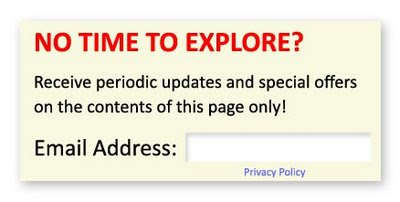
Imagine you are quickly scanning a webpage. The content is relevant to you, but you don’t have time to fully explore it. Wouldn’t it be nice if there was a little box in the upper corner of the page that said:


This little tiny form serves 2 purposes:
  1. It generates a new lead (with an email address) in exchange for providing a service (saving the visitor time by pushing relevant content to them)
  2. It provides valuable segmentation so you can continue to send relevant content to this person.

Yes, I know you have a Contact Us form, but:

  • Visitors have to find it
  • Visitors have to fill out more than one field typically
  • Usually visitors don’t get to pick what content they want to receive

Besides, this doesn’t replace your Contact Us form, it is just a convenient adjunct.

Little Tiny Form Do’s and Don’ts

Do make it obvious. Adding a tiny text link at the bottom of the page will get you zero submissions. Make it obvious, bold and inviting – usually the upper left or right corner is best.

Do add it to product or service-specific pages. If product X actually covers multiple pages, add it to each of those pages. A submission to any of these pages, means your visitor is interested in Product X.

Don’t add it to pages that you don’t have additional content to send them. If someone submits this, they will expect to receive something. It doesn’t mean you need to send them something new every day. See my blog post on communication frequency Best Practices.

Don’t expect a huge response. But try modifying the placement, size or discontinuity of this tiny little form if your submissions are weak. You might be surprised to be getting more submissions from these little forms than from your regular Contact Us page.

Also, just adding the opportunity to sign up for something on a given page won’t work unless you provide a clear benefit in doing so. In this case, offering to save the visitor time, do less work and only get the exact content they are interested in seems like a fair exchange for providing their email address.

You've probably spent hours and hours developing and updating your website. Here is a fanatastic (and free) way of generating new, segmented leads.

Steve Kellogg
aDemand Generation/Marketing Automation Consultant, Astadia
aEloqua Certified Marketing Best Practices Consultant

On Twitter? Tweet this Post